
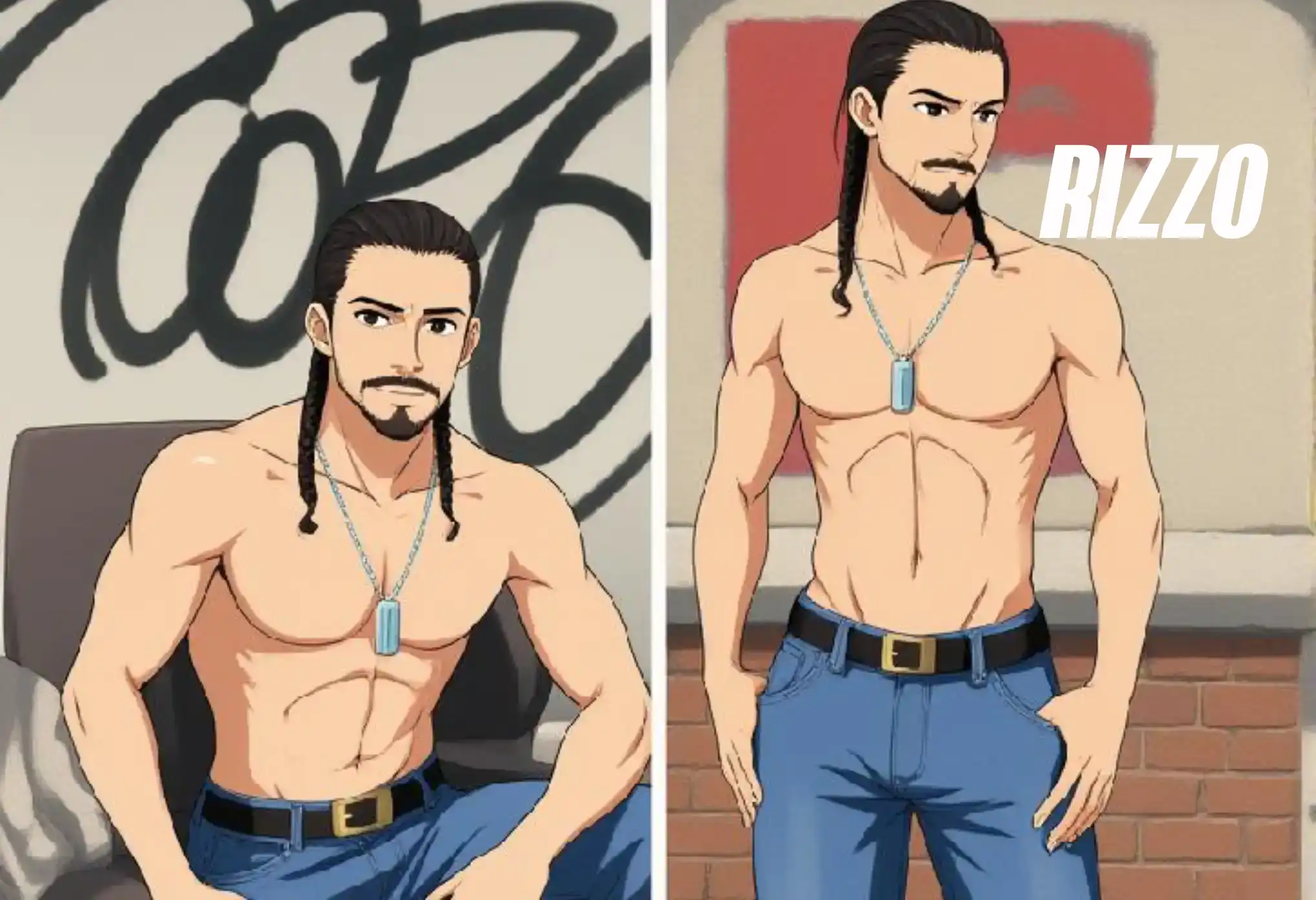
Graffiti Walls Beefcake Dog Tags
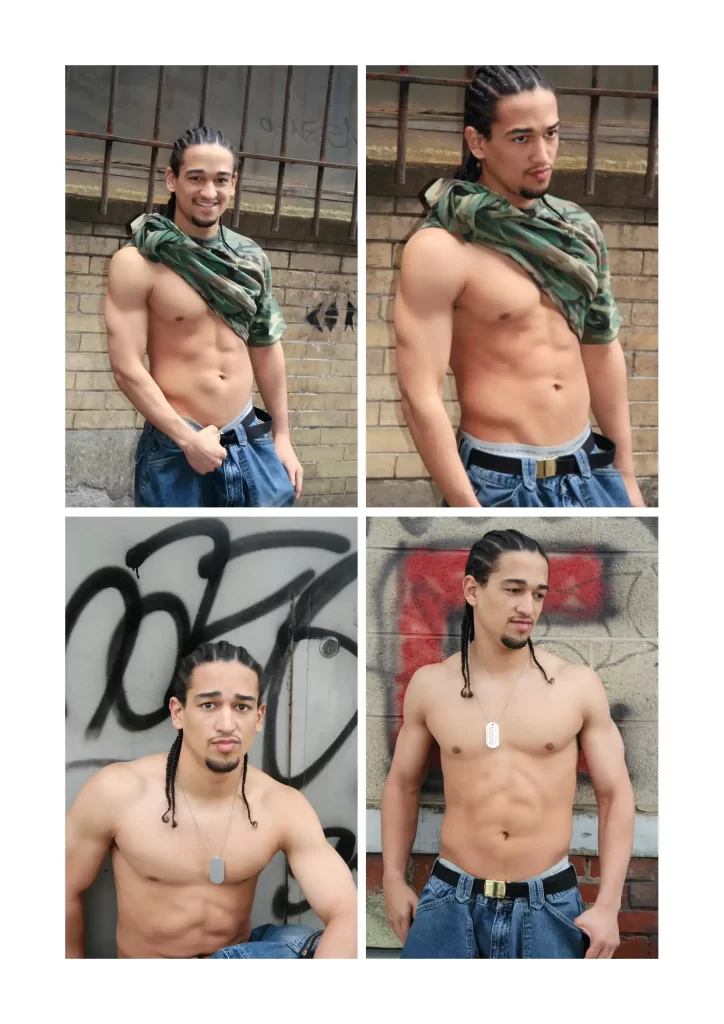
Rizzo stood shirtless in the alley behind his apartment in East LA, the morning sun casting long shadows across the graffiti-covered walls. His jeans hung low on his hips, dog tags clinking softly against his chest with every breath. The tags weren’t military-issued—they were a gift from his brother. A quiet nod to strength when words had failed.
He’d always felt like a contradiction: bold in style, quiet in truth. His braided hair was a statement, his body a canvas of discipline and defiance. But inside, he carried a secret that felt heavier than any weight he’d ever lifted.
Coming out in LA wasn’t supposed to be hard. The city was loud, proud, and unapologetic. But Rizzo’s world wasn’t the glossy Westside. It was the cracked sidewalks of Boyle Heights, where masculinity was armor and vulnerability was a risk. His crew respected him for his grit, not for who he loved. And that was the problem.
Hunk Coming Out
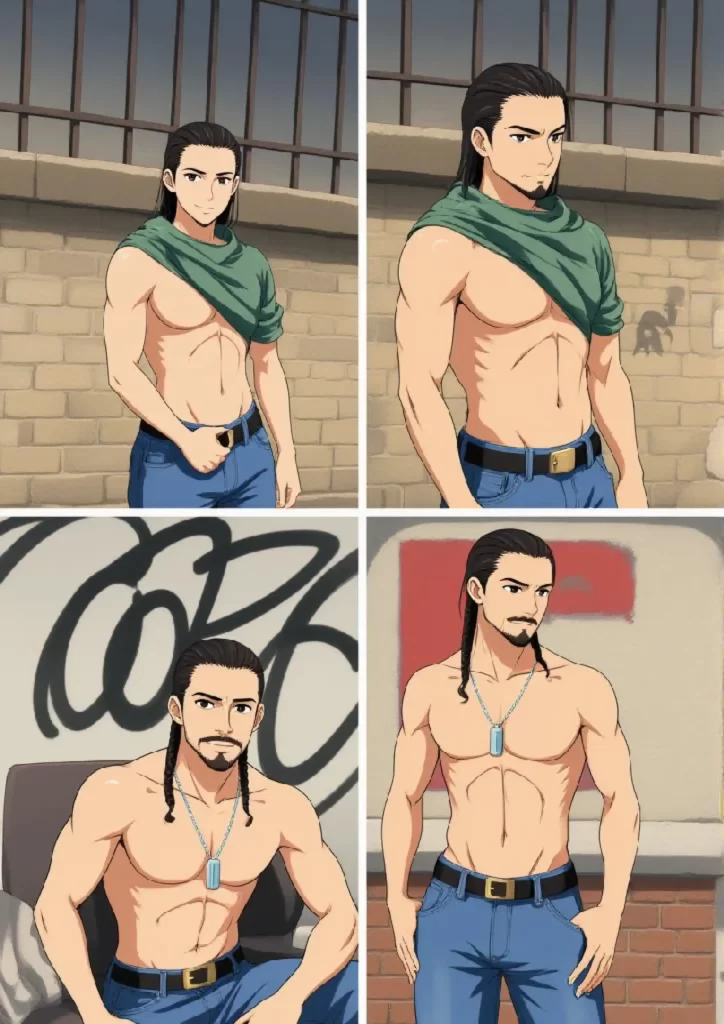
He draped a camouflage shirt around his shoulders, not to hide, but to remember. It was the same shirt he wore the first time he kissed someone who made his heart race. Not a girl, but a boy named Eli, who had eyes like dusk and a laugh that made Rizzo feel seen. That night had been electric. And terrifying.
Now, standing in front of the wall tagged with “LIVE LOUD,” Rizzo felt something shift. He wasn’t just posing for the camera anymore. He was claiming space. Owning his story.
He posted the collage later that day—four images, each one a piece of him. No caption. Just the photos. The shirt, the dog tags, the graffiti. Within minutes, the comments rolled in. Some were confused. Some were cruel. But most were love. Real love.
That night, Eli texted: “You finally showed them the real you. I’m proud.”
Rizzo smiled, leaning back against the brick wall, the city humming around him. He wasn’t just out. He was free.