
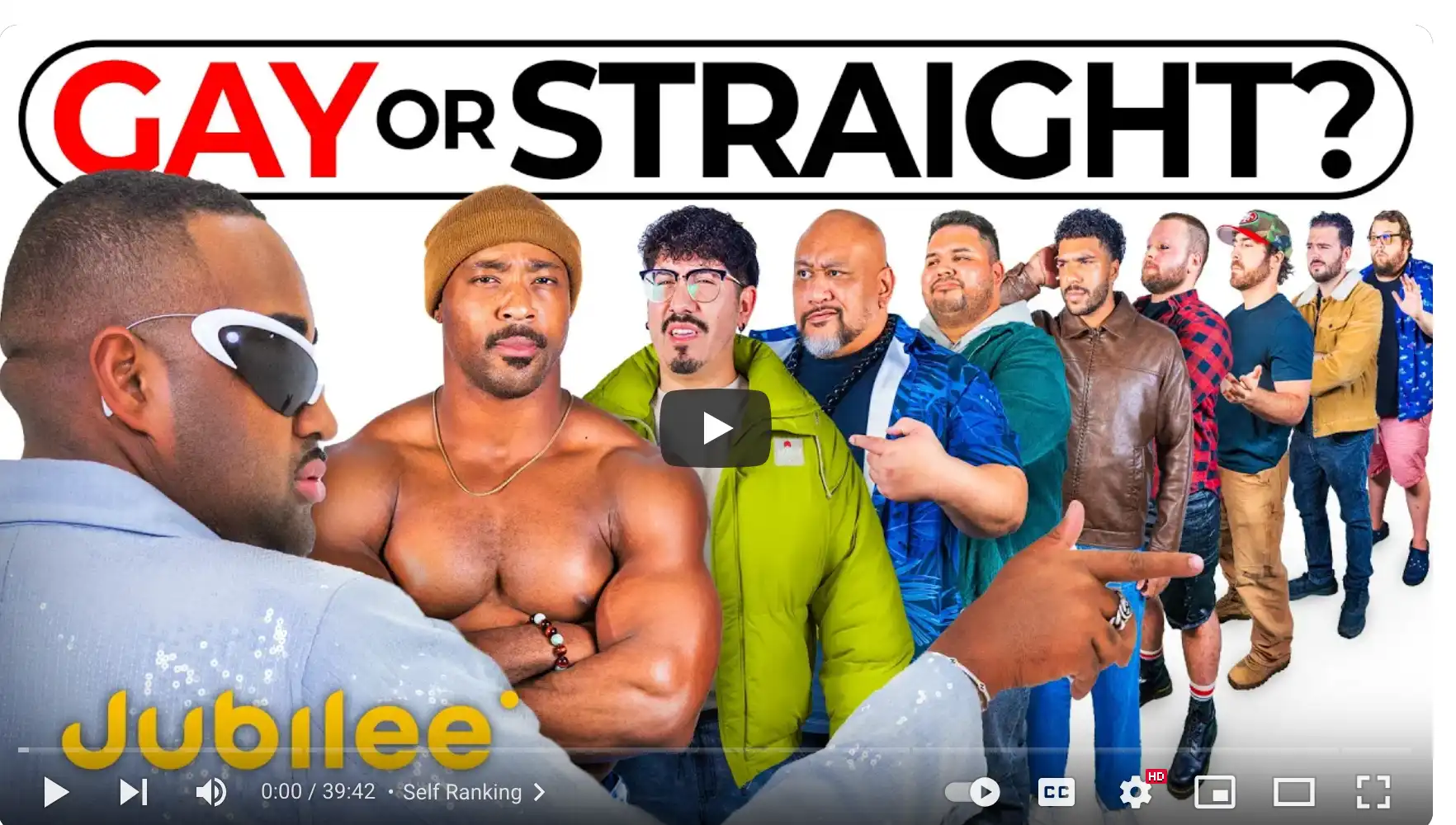
Gay Men Test their Gaydar
The video Gay Men Test their Gaydar features three men attempting to guess whether individuals in a lineup are gay or straight. The concept plays on the idea of “gaydar,” the supposed ability to intuitively determine someone’s sexual orientation based on appearance, mannerisms, or other subtle cues.
Throughout the video, the participants engage in lighthearted discussions about stereotypes, personal experiences, and the accuracy of their guesses. Some moments highlight how preconceived notions can be misleading, while others reinforce common assumptions. The video also explores the diversity within the LGBTQ+ community, showing that identity and presentation don’t always align with societal expectations.
The tone of the video is fun and engaging, encouraging viewers to reflect on their own biases while enjoying the playful interactions. It serves as both entertainment and a conversation starter about the complexities of identity and perception.
Here are the core themes that thread through “Gay Men Test their Gaydar”:
Stereotypes vs. Individuality The video underscores how we lean on surface cues—voice, posture, style—to slot people into “gay” or “straight” boxes. It quickly becomes clear that those heuristics are shaky at best, reminding us that nobody neatly fits a cultural mold.
The Myth of “Gaydar” By treating gaydar like a superpower, the participants highlight its dubious nature. Their misses and hits show it’s less about a sixth sense and more about guesswork steeped in bias.
Unconscious Bias & Self-Reflection Each misidentification sparks a mini reality-check. The men call themselves out on knee-jerk judgments, turning the game into a mirror for our own blind spots.
Diversity of Expression When someone who “vibes straight” turns out gay (and vice versa), it celebrates LGBTQ+ variety—demonstrating that identity doesn’t come with a single look or walk of life.
Playful Education Framing this as a lighthearted challenge keeps things fun, but it also sneaks in a deeper lesson: pop quizzes on people can reveal a lot about our assumptions.
— Want to dive deeper? You might explore: • The psychology of first impressions and why they mislead. • Academic takes on “gaydar” and its social impact. • Personal essays from LGBTQ+ voices about defying stereotypes.